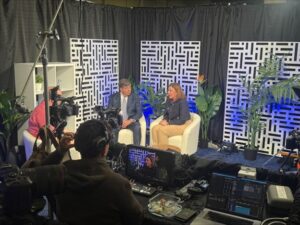
 We went to HIMSS this year and saw what everyone else saw – AI is everywhere. It is no longer a future idea, as people are using it now. You can see that companies are starting to figure out where it actually works and where it does not. That felt like real progress for our industry.
But after being there, something else stood out. A lot of what is being built does not align with how people actually deal with their health.
Engagement still comes down to solving real problems
There is a strong belief right now that scaling outreach using AI will automatically improve engagement. The assumption is simple; if we contact people more often, we will get better results.
In reality, the populations that health plans are trying to reach are usually dealing with something more immediate. They might not have a provider, they might not have transportation, or they might not understand their benefits.
Until those barriers are resolved, nothing else really moves.
Technology can support the work, but it cannot replace it
AI will continue to improve, and it will make many processes faster, more efficient, and more scalable, but it still struggles when something does not follow a standard path.
I saw that firsthand after the conference when I was trying to book a hotel room late at night. I ended up stuck in a loop with an AI agent that could not process what I was asking for. It just could not understand the request because it did not fit into its normal flow. It was easier to walk into a hotel and talk to someone who immediately understood what I needed, which was just a late night check-in.
That is a small example, but it reflects the much larger gap we see in healthcare every day.
 People still choose real interaction
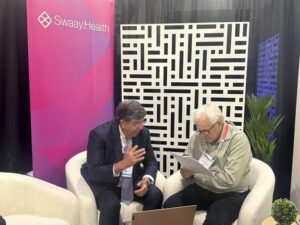
For a conference focused on technology, the busiest parts were the ones built around people talking to each other.
It’s obvious that human connection is still what people want, and what drives things forward. Trust does not come from a message, it comes from someone listening and helping.
Where this lands
AI is going to keep improving, and I believe it will make a lot of things faster and easier behind the scenes. AI will play a critical role in the future of healthcare, but the part that actually gets people to follow through, show up, and get care is still human.
If we met at HIMSS and you’d like to connect further, please don’t hesitate to reach out: https://www.86borders.com/contact/